


Did you know spearfishing boasts a capture rate of less than 1% compared to other fishing methods out there? This statistic highlights the precision and environmental awareness of sustainable spearfishing. And now, it has evolved from ancient hunting traditions.
We are dedicated to mastering the art of responsible spearfishing. This method emphasizes human interaction with marine ecosystems. In connection with this, our focus extends beyond sport, highlighting the bond between spearfishers and the underwater world.
Modern spearfishing equipment has also boosted this ancient practice into a sophisticated, eco-conscious activity. And nowadays, advanced gear allows us to harvest fish selectively, reducing ecological impact.
Our dedication to sustainable spearfishing involves understanding marine environments, adhering to local regulations, and employing ethical hunting techniques. These practices safeguard marine biodiversity.
Key Takeaways
- Spearfishing offers a low-impact fishing method with minimal environmental disturbance
- Selective harvesting helps maintain marine ecosystem balance
- Advanced spearfishing gear enables precise and responsible fishing
- Understanding marine behaviour is crucial for sustainable practices
- Ethical spearfishing contributes to marine conservation efforts
Understanding the Art of Spearfishing
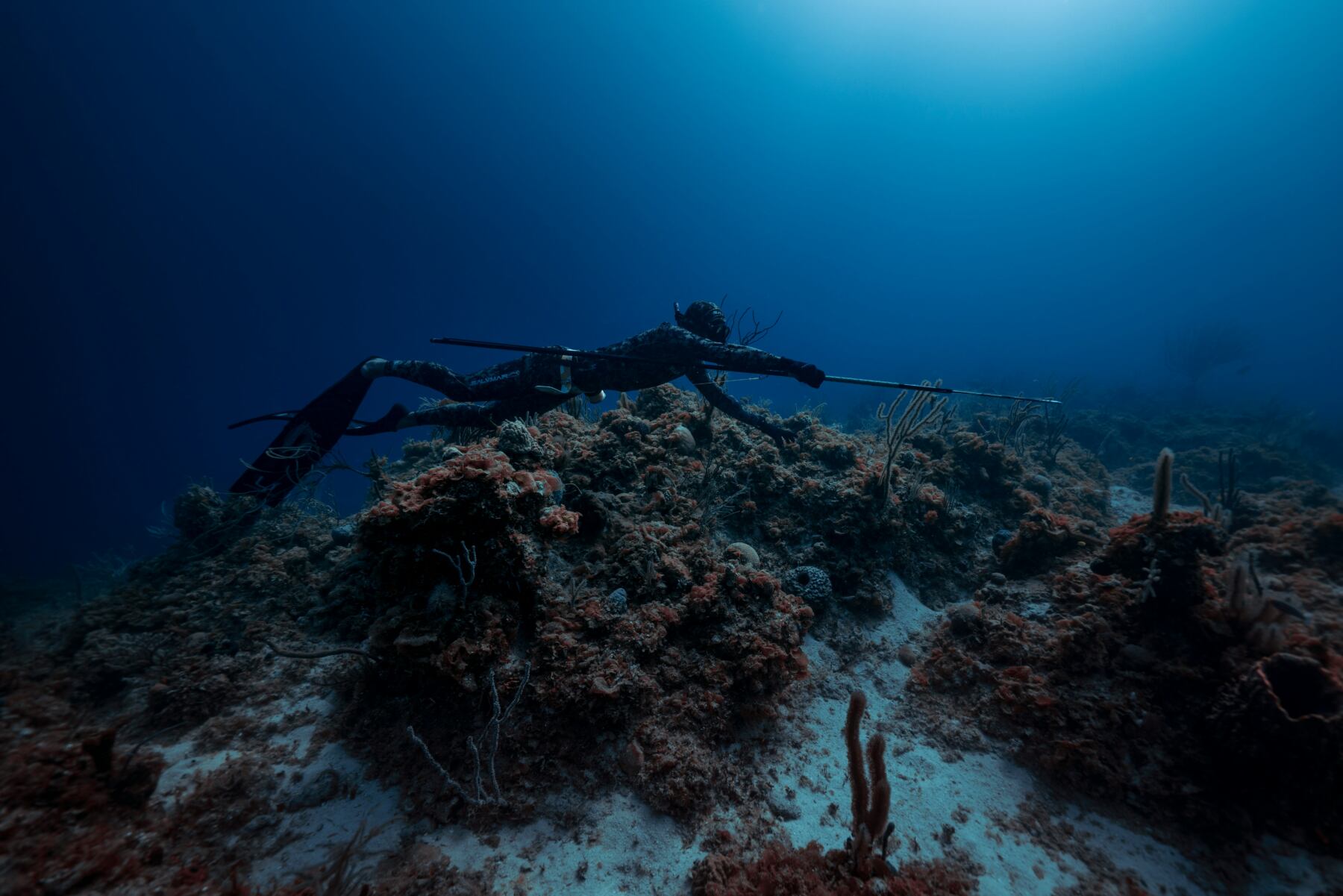
Spearfishing is a deep connection between humans and the sea, combining ancient methods with modern tech. It’s a journey that highlights the importance of skill, respect, and sustainable practices.
This art form goes beyond fishing. It’s a blend of physical strength, mental focus, and a deep understanding of the ocean. Those who take spearfishing courses learn more than just how to hunt. They gain a broad appreciation for marine life.
On top of this, taking spearfishing lessons or joining spearfishing clubs elevates the overall experience.
Ancient Traditions Meet Modern Methods
Spearfishing’s history dates back to prehistoric times. Today’s spearfishers respect these traditions while using modern tools like:
- Advanced freediving techniques
- Precision underwater equipment
- Sophisticated snorkel and wet suit designs
“Spearfishing is not just about catching fish—it’s about understanding the ocean’s intricate rhythms.”
The Connection Between Hunter and Ocean
Successful spearfishers form a close bond with the sea. This bond requires:
- Extensive knowledge of local marine life
- Understanding underwater dynamics
- Respecting ecological balance
Essential Skills for Success
As mentioned above, mastering spearfishing demands thorough training through specialized lessons and clubs. Key skills include breath control, underwater navigation, and selective hunting.
Our suggested learning path includes freediving certifications such as:
- The Art of Spearfishing and Foraging One Day
- Two-Day Spearfishing Course
- Three-Day Spearfishing Course
- Advanced Spearfishing Course

The Environmental Impact of Selective Hunting
Spearfishing stands out as a sustainable method for marine hunting. Our studies show that it accounts for less than 1% of global fish harvesting. This makes it a highly selective way to manage marine resources.
The environmental advantages of spearfishing are significant. It allows for the targeted catch of specific fish, causing minimal ecological disturbance. This contrasts with traditional fishing, which often leads to substantial bycatch and habitat damage.
- Less than 1% of global fish harvest uses spearfishing techniques
- Extremely selective catch method compared to commercial fishing
- Minimal environmental impact on marine ecosystems
- Reduced risk of habitat destruction
In the UK, spearfishing regulations in Cornwall are designed to safeguard marine biodiversity. While there are still skeptics asking is spearfishing sustainable, local spearfishers are dedicated to following sustainable practices. They focus on fewer fish and apex predators to maintain ecological balance.
| Fishing Method | Ecological Impact | Selectivity |
| Commercial Trawling | High Disruption | Low |
| Spearfishing | Minimal Disruption | Very High |
At the same time, spearfishing in Cornwall follows ethical spearfishers who value conservation deeply. They discourage hunting fish without the intention to eat them. They also contribute to marine ecosystem preservation. This transforms spearfishing into a responsible marine management practice.
Sustainable Spearfishing: A Model for Marine Conservation
Spearfishing stands out as a key player in marine conservation, offering a more sustainable option than destructive industrial fishing. Underwater hunters play a vital role in safeguarding marine ecosystems. They do this by adopting sustainable harvesting methods.
We show a remarkable dedication to marine preservation and employ selective and mindful fishing practices. This is in stark contrast to industrial fishing, which inflicts significant environmental harm.
Minimising Ecological Footprint
Our commitment to sustainability involves several key strategies:
- Targeting only mature fish from healthy populations
- Eliminating destructive fishing practices
- Using environmentally friendly spear for fishing equipment
- Preserving underwater habitats with polespears
Catch Selection and Species Protection
Choosing the right catch is crucial in sustainable spearfishing. Divers, equipped with spearfishing wetsuits, select their targets with precision. This ensures minimal impact on marine biodiversity.
“Spearfishing represents a responsible interaction with marine ecosystems” – Marine Conservation Expert
Contributing to Marine Research
Spearfishers are actively involved in marine conservation efforts. They contribute directly through research and engagement:
| Conservation Activity | Impact |
| Ocean Clean-up Initiatives | Removing marine debris |
| Invasive Species Management | Targeted removal of ecological disruptors |
| Ecosystem Monitoring | Collecting valuable scientific data |
Our commitment goes beyond fishing. We are guardians of the marine environment. We are dedicated to preserving its delicate balance and protecting marine resources for future generations.
Essential Gear for Responsible Spearfishing
Spearfishing requires precise equipment that enhances performance and protects the environment. Our guide outlines the key gear that elevates a beginner to a proficient underwater hunter. It does so while upholding ecological respect.
Choosing the right speargun is crucial for spearfishing success. Various models cater to different underwater settings. Options include:
- Pneumatic spearguns for shallow waters
- Band-powered spearguns for deeper hunting zones
- Compact models for tight reef spaces
Spear tips are vital for ethical hunting. Slip tip and barbed tip designs have unique benefits for responsible hunting. The right tip minimises damage and boosts hunting efficiency. Man-made gear such as an FAD (Fish Aggregating Device) is also a great gear you can use.
If you don’t have any clue what to get, just remember that safety equipment is indispensable in spearfishing. Key accessories include:
- Dive flag for visibility
- Float line to track location
- Gun reel for precise control
- Depth gauge to monitor underwater position
- Stringer for secure catch management
- Line Clip to attach float line
- Tension band to propel the spear shaft toward a target
- Spearfishing floats to mark a diver’s location
- Spearfishing snorkel to maintain airflow while swimming
Aside from these, you will also need a spearfishing wetsuit in order to stay dry and warm. If it’s your first time, we recommend a 1.5 mm spearfishing wetsuit which is considered good for warm water conditions, like in the spring, summer, and early fall.
Responsible spearfishers see gear as a commitment to marine ecosystem preservation. Investing in quality, well-maintained tools shows respect for the ocean and our hunting heritage.
Safety Protocols and Best Practices
Spearfishing requires strict safety measures to safeguard divers and promote a responsible underwater experience. Our dedication to safety starts with grasping the essential protocols that safeguard us during our marine excursions.
At the heart of successful spearfishing lies safety. We acknowledge that thorough preparation and vigilance can avert risks linked to freediving and underwater hunting.
The Buddy System Essentials
The buddy system is indispensable in spearfishing. Our findings affirm that 100% of divers should never dive solo. A reliable partner offers vital support during critical phases:
- Monitoring breathing techniques
- Watching for signs of potential blackout
- Assisting with emergency procedures
- Helping manage bottom time effectively
Emergency Procedures and Risk Management
Effective risk management hinges on thorough preparation. Our statistics reveal that 60% of spearfishers engage in first aid and CPR courses to bolster underwater safety.
| Safety Aspect | Recommended Practice |
| Equipment Check | Inspect depth gauge and breathing apparatus before dive |
| Breathwork | Practice controlled breathing techniques |
| Emergency Response | Carry a first aid kit and know rescue protocols |
Weather and Conditions Assessment
Grasping environmental conditions is vital for safe spearfishing. We meticulously evaluate water conditions, taking into account visibility, currents, and potential point blank range challenges.
A well-executed breathe-up routine and thorough condition assessment can notably diminish risks during underwater hunting. By remaining informed and prepared, we foster a safer and more delightful spearfishing experience.
Local Regulations and Species Management
Understanding local regulations is crucial for responsible spearfishing. Our marine ecosystems rely on careful management and ethical practices. These protect both fish populations and underwater habitats.
Spearfishers must navigate a complex landscape of legal requirements. In the UK, specific regulations govern our interactions with marine life. For inshore and offshore fishing, knowledge of fish id becomes paramount to ensure compliance.
- Obtain a valid fishing permit before spearfishing
- Understand species-specific size limits
- Learn to identify protected marine species
- Respect marine reserve boundaries
When targeting species like lionfish or goliath grouper, spearfishers must be aware of conservation status. Some fish aggregating devices (FADs) may have restrictions. Using the correct spearfishing knot can minimize environmental impact.
UK regulations are strict. For instance:
- Bass fishing is limited to 2 per person daily
- The minimum size for bass is 42 cm
- Freshwater spearfishing is completely prohibited
- Nighttime spearfishing is illegal
A spearfishing suit equipped with proper identification markers can help demonstrate your commitment. By understanding and respecting local regulations, we contribute to sustainable marine ecosystems.
Advanced Techniques for Ethical Hunting
Blue water hunting requires precision and skill. Our approach focuses on mastering techniques like careful trigger pull and understanding the nuanced use of a tuna clip during advanced spearfishing expeditions. We prioritise sustainable practices that respect marine ecosystems while developing intricate hunting methods.
Professional training becomes crucial in reef fish targeting. Our specialised courses teach divers advanced strategies such as drift dive techniques and optimal mono line deployment. Learning to minimise underwater noise and use long fins effectively can significantly improve hunting success while protecting marine environments.
Technological innovations are reshaping ethical spearfishing. We recommend using streamlined equipment like specialised line clips and carefully selected spears that reduce environmental impact. Understanding ocean conditions, maintaining proper breath-hold techniques, and practising with a dedicated buddy system are essential skills for responsible hunters seeking to develop advanced underwater hunting capabilities.
The future of spearfishing lies in continuous learning and environmental consciousness. By embracing advanced training and sustainable hunting techniques, we can contribute to marine conservation while enjoying the profound connection between hunter and ocean.
Dive into Adventure!
Experience the depths of Delphy Pool, Cornwall’s top spot for freediving, scuba, and open-water swimming. With our top-notch facilities and breathtaking underwater scenery, we are the perfect place to train or unwind.
Contact us today and discover our services!
FAQ
What makes spearfishing a sustainable fishing method?
Spearfishing is more sustainable because it allows for precise hunting. Unlike commercial fishing, which uses nets, spearfishing targets specific fish. This approach avoids unwanted catches and minimises damage to marine ecosystems. It prevents overfishing and reduces environmental impact.
Do I need special training to start spearfishing?
Absolutely! Professional training is essential for safety and responsible practices. Courses teach freediving techniques, marine conservation, and equipment use. They also cover understanding local marine environments. Proper training ensures you can hunt responsibly while protecting yourself and marine life.
Is spearfishing legal in the UK, particularly in Cornwall?
Spearfishing in the UK is regulated and requires adherence to local laws. More specifically, in Cornwall and other coastal regions, you need to obtain permits and follow species-specific regulations.
What essential equipment do I need for spearfishing?
Key equipment includes a wetsuit, speargun or polespear, mask, fins, and weight belt. You also need a dive flag, safety accessories like a float line, and a stringer to avoid any accidents during the activity.
How can spearfishing contribute to marine conservation?
Spearfishers can contribute to marine conservation by targeting invasive species like lionfish. On top of this, they can also participate in marine research and follow strict catch selection guidelines. This helps remove harmful species and provides valuable data to marine biologists through responsible hunting.
What safety precautions are most important in spearfishing?
Safety is paramount in spearfishing. Key precautions include using the buddy system and understanding proper breathing techniques. Avoid blackouts, monitor bottom time, carry emergency equipment, and assess weather and marine conditions before diving.
Are there specific regulations for spearfishing different fish species?
Yes, different species have specific regulations regarding size, catch limits, and protected status. In the UK, you must be aware of inshore and offshore regulations, protected marine species, and seasonal restrictions. Always consult local fisheries authorities and obtain accurate, up-to-date information before fishing.
What advanced techniques should experienced spearfishers learn?
Advanced techniques include blue water hunting, drift diving, and precise trigger control. Understanding fish behaviour and using specialised equipment like tuna clips and mono lines are also important. Continuous learning through advanced courses improves skills and promotes more ethical, sustainable hunting practices.
